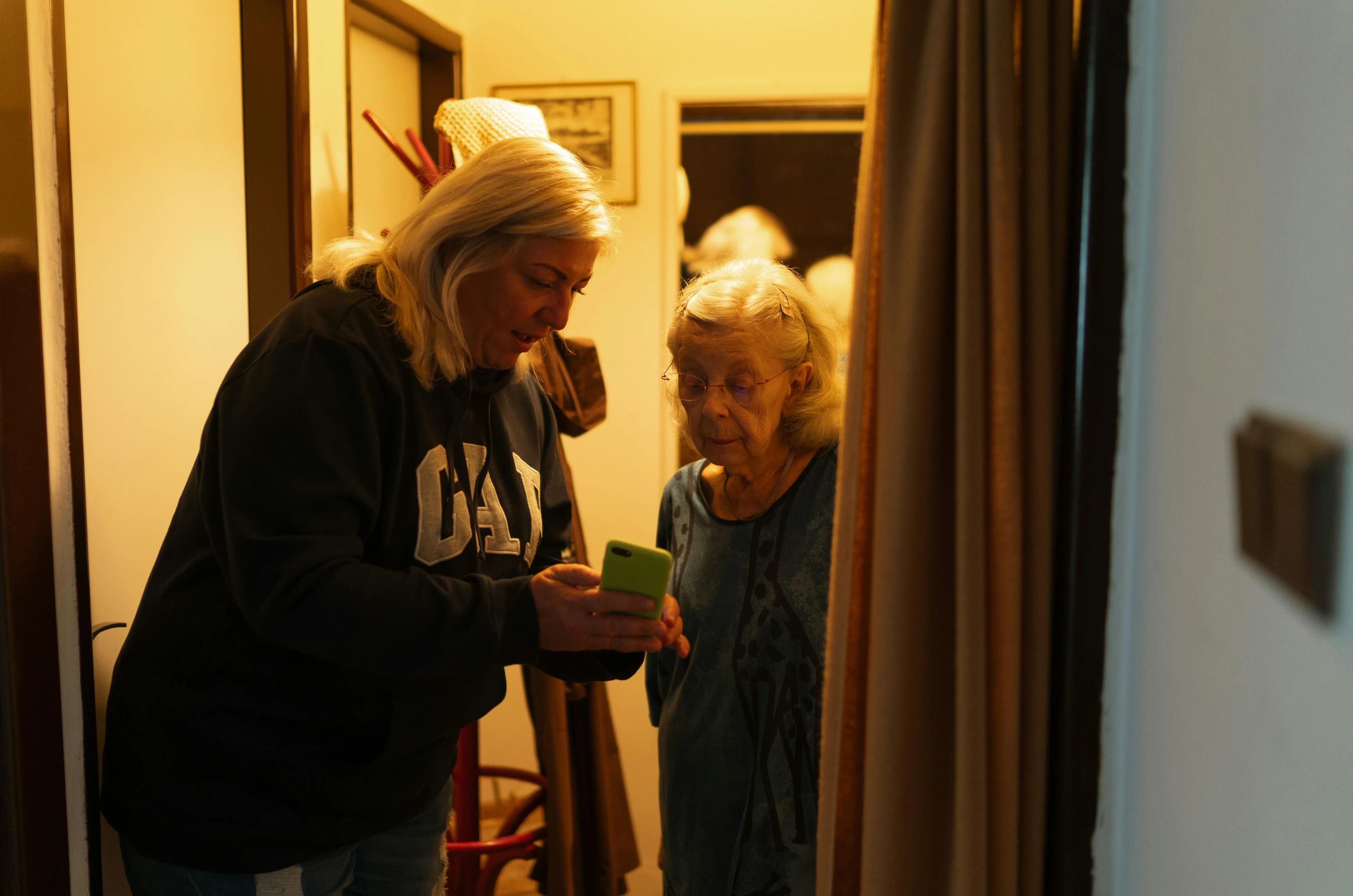
Yesterday afternoon, Joan called her mother at their usual time. Her mom picked up, paused, and said, "Who is this?" Joan had spoken to her just that morning. She felt her stomach drop — not because the question was new, but because she still was not sure how to answer it without making things worse.
If you are caring for a parent with dementia, moments like this are part of the landscape. An estimated 7.2 million Americans age 65 and older are living with Alzheimer's disease, the most common form of dementia, and that number is expected to nearly double by 2060 (Alzheimer's Association, 2025). Behind every one of those numbers is a family trying to figure out how to stay connected when memory is changing.
A phone call routine will not stop the disease from progressing. But a calm, predictable structure can reduce confusion, lower stress for both of you, and make each conversation feel safer — even on hard days.
Start with safety foundations
Pick one primary call window
Choose a time that lines up with your parent's strongest hours of focus. For many people with dementia, late morning tends to work best. That is because of a pattern called sundowning — increased confusion, anxiety, and agitation that often sets in during late afternoon and evening. Research suggests that 20 to 45 percent of people with Alzheimer's experience some form of sundowning (Alzheimer's Association).
If your parent seems calmer and more alert before noon, start there. Keep the window consistent for at least two weeks before making any changes.
Prepare the environment
Before calls, reduce anything that could add to confusion:
- Lower the TV or background noise
- Keep hearing aids and glasses nearby
- Use the same room or chair when possible
- Place a simple reminder card by the phone ("Anna calls at 10 a.m.")
Define your backup path
Set a clear plan for when calls go unanswered:
- First retry after a short gap (15 to 20 minutes)
- Second retry in a backup window
- Contact trusted person A
- Contact trusted person B
- Move to urgent care steps if needed
Imagine your mom does not pick up at 10 a.m. and does not answer the retry at 10:20. With Ultaura, the system can automatically notify your brother at 10:30 and text your mom's neighbor at 10:45 — all following the backup path you set up once in the dashboard, without anyone scrambling to remember who to call next.
Use a repeatable call structure
Using the same call flow each time lowers mental effort for your parent. When the shape of the conversation stays familiar, your parent can relax into it even on days when memory is especially foggy.
Four-part call flow
- Orientation cue (30 to 60 seconds)
- "Hi Mom, it's Anna, your daughter. Today is Tuesday morning. I'm calling for our regular check-in, just like yesterday."
- Safety and comfort check (2 to 3 minutes)
- "Did you eat breakfast? Do you need water? Any pain right now?"
- One small plan (2 to 4 minutes)
- "After lunch, let's take a short walk down the hallway."
- Warm close with next touchpoint (30 to 60 seconds)
- "I will call again at 7:00 tonight. You are not alone, Mom."
A note about identity confusion
Some days your parent may not recognize your voice on the phone, even if they knew you in person an hour earlier. This is common with dementia and does not mean the relationship is gone. If it happens, gently reintroduce yourself: "It's Anna — I'm your daughter. I call you every morning at this time." Keep your voice warm and steady. The tone matters more than whether they place you right away.
Helpful prompt style
Prefer short, concrete prompts that limit the number of decisions:
- "Would you like tea or water?" instead of open-ended choices
- "Let's do one step now" instead of "What should we do today?"
- "I am calling at our usual time" instead of "Do you remember why I called?"
Language choices that reduce confusion
Do
- Speak slowly and pause between thoughts
- Use names and time anchors ("this morning," "after dinner")
- Ask one question at a time
- Validate feelings before correcting facts — for example, if your mom says "I need to pick up the kids from school" (her children are adults), try: "It sounds like you're thinking about the kids. They're doing great. Let's have some tea together." Acknowledging the feeling behind the words keeps the conversation calm, while jumping to "That was 30 years ago" can cause distress.
For guidance on keeping medication reminders respectful during these calls, see our post on medication reminder calls that respect independence.
Avoid
- Rapid topic switching
- Quizzing memory ("You remember this, right?")
- Arguing over details
- Long multi-step instructions
Weekly routine checklist
Run this checklist once each week:
- Confirm call times still match your parent's strongest hours
- Review missed calls and update the backup path
- Refresh reminder cards near the phone
- Check if hearing, vision, or device issues affected calls
- Reconfirm trusted contact order and phone numbers
- Note any new behavior changes to discuss with professionals
- Document patterns for other caregivers or respite workers — write a brief note each week so anyone stepping in can follow the same routine without guessing
If a call is missed and you are unsure what to do next, our guide on what to do after a missed check-in call walks through a step-by-step response.
If confusion is increasing
Adjust quickly, but make one change at a time:
- Shorten calls to 5 minutes or less
- Move calls earlier in the day, well before sundowning hours
- Increase repetition and reduce choices
- Add a second short check-in instead of one long call
When to call the neurologist
If you notice any of the following, schedule an appointment rather than waiting for the next routine visit:
- Sudden change in confusion level (noticeably worse within days, not weeks)
- New difficulty recognizing close family members in person
- Wandering, getting lost in familiar places, or leaving the house at odd hours
- Trouble swallowing, frequent falls, or new incontinence
- Personality shifts — sudden aggression, paranoia, or withdrawal that was not there before
If you need guidance or support between appointments, the Alzheimer's Association 24/7 Helpline is available at 800-272-3900. They can help you talk through what you are seeing and decide on next steps.
Need a predictable call routine without managing every detail yourself? Ultaura can call your parent at the same time each day, follow the same calm structure, and alert your family if something seems off — so you spend less time coordinating and more time connecting. See how it works →
The goal: calm, not perfect
A good dementia care routine does not require perfect conversations. It requires predictable connection, clear safety checks, and a reliable backup path when a call is missed.
Some days your parent will be sharp and funny. Other days they will be confused or upset, and the call will last two minutes. Both of those are okay. What matters is that you showed up, the routine held, and your parent felt someone steady on the other end of the line.
Caring for a parent with dementia also means caring for yourself. The grief of watching someone you love change is real, and it does not wait for a diagnosis to start. If you are feeling stretched thin, you are not failing — you are doing one of the hardest jobs there is. Our post on caregiver burnout signs and how check-in calls help has practical strategies for protecting your own energy while you care for someone else.
Not medical advice: this guidance is educational and should be used alongside recommendations from licensed healthcare professionals.